

Table of Contents
On August 25, 1991, a 21-year-old computer science student in Helsinki posted a short message to an online discussion group. He was working on a new operating system and wanted to share what he had been building during the summer.
There was no launch campaign, no company behind the project and no reason to believe that this small announcement would one day become part of software history.
The student was Linus Torvalds. He described the project as a hobby and made it clear that he did not expect it to become something large or professional.
Thirty-five years later, we know that project as Linux.
Today, Linux is deeply embedded in the digital world. It powers servers, cloud infrastructure, supercomputers, networking equipment and countless embedded devices. Android itself is built on the Linux kernel.
What makes the story remarkable, however, is not only what Linux became. It is how simply it started.
When Curiosity Became a Project
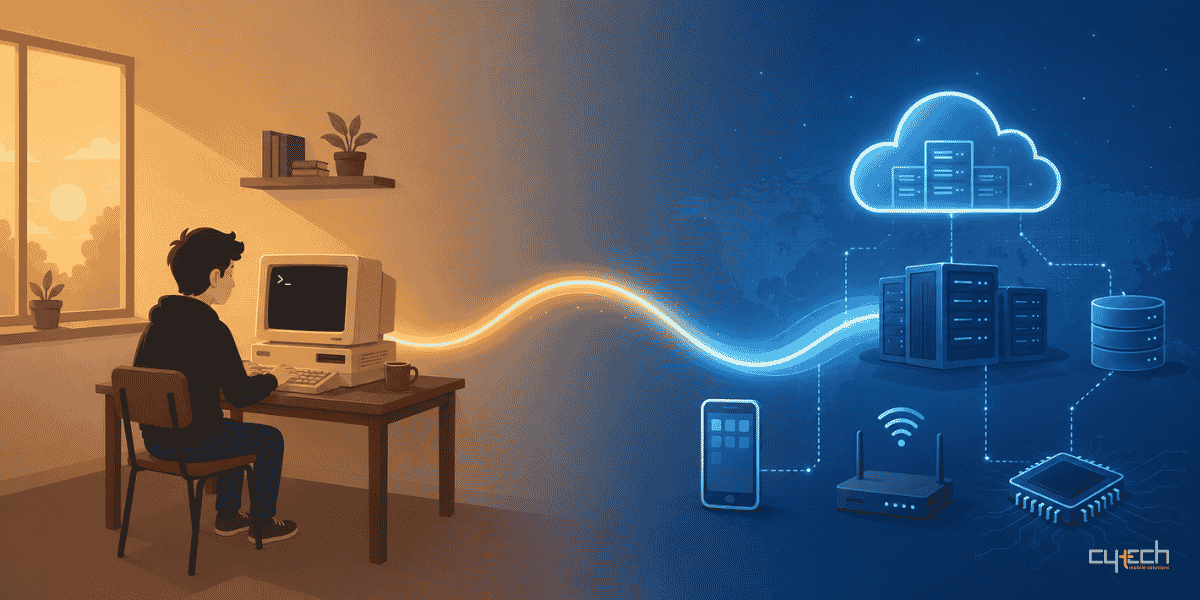
Torvalds was studying computer science at the University of Helsinki when he became increasingly interested in operating systems. At the time, he was experimenting with MINIX, a Unix-like system mainly designed for educational purposes.
Like many developers, he began by exploring how the existing system worked and thinking about what he would like to change.
His curiosity slowly turned into a project. He started working on a terminal emulator for his computer, but the experiment kept growing. New capabilities were added, new problems appeared and solving one technical challenge often led to another.
There was no detailed roadmap for what Linux would become. There was simply a developer trying to understand a problem and build something better.
That is one of the reasons the story remains so relevant today. Important software does not always begin with an enormous vision. Sometimes it starts because someone asks a very simple question:
Could this work better?
The Moment Everything Changed
Linux might have remained a personal experiment if Torvalds had kept it on his own computer.
Instead, he shared it.
Other developers began testing the software, reporting problems and suggesting improvements. Some started contributing code themselves. Slowly, the project stopped belonging to just one person and became something a wider community could shape.
Linux improved because people were actually using it. Bugs were discovered and fixed. Support for new hardware was added. Features evolved as new needs appeared.
It was not created as a perfect finished product.
It grew through iteration.
That principle remains central to software development today. Teams can spend months researching, planning and trying to predict what users will need, but real products always encounter uncertainty. Requirements change. Users behave differently than expected. New technologies appear.
Sometimes the only way to understand what software should become is to build it, release it and learn from what happens next.
The Power of Community
As Linux grew, a community formed around it.
Developers were able to study the software, modify it and build new solutions on top of it. Over time, universities, independent programmers and technology companies all became part of the ecosystem.
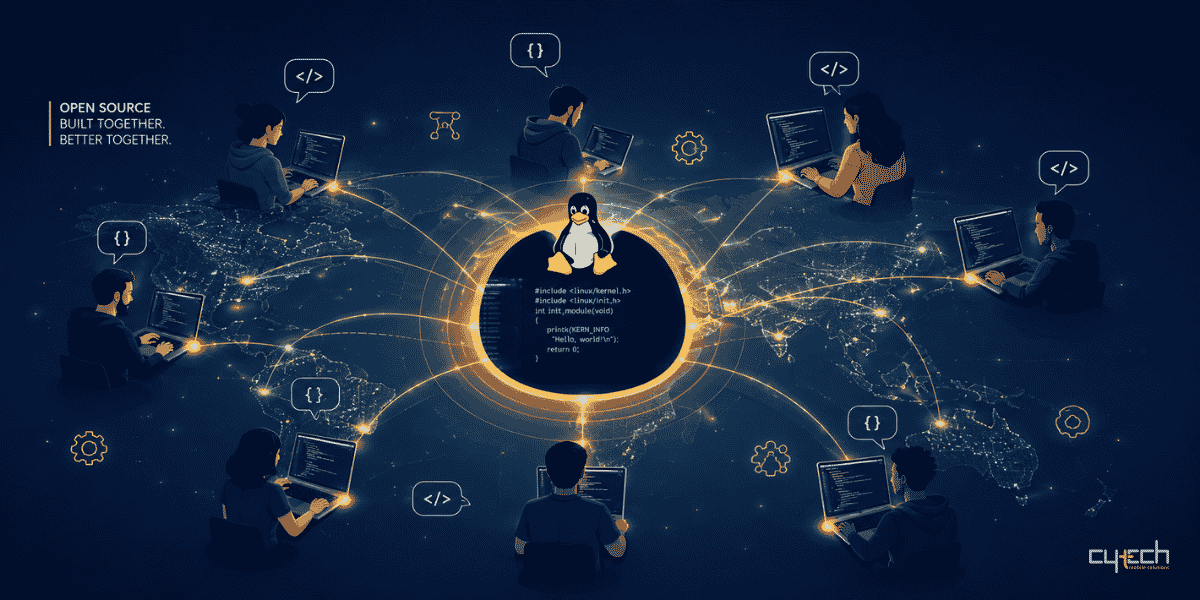
Different Linux distributions appeared. New tools were created. Businesses adopted the system for products and infrastructure.
Innovation was no longer happening in one place.
It was happening across a global community.
This is one of the most powerful ideas behind open software ecosystems. Technology can become far more valuable when other people are able to extend it. The same principle can be seen today in APIs, integrations, developer platforms and open standards.
Sometimes the greatest value of software is not only what its original creators build, but what others are able to build around it.
From Side Project to Global Infrastructure
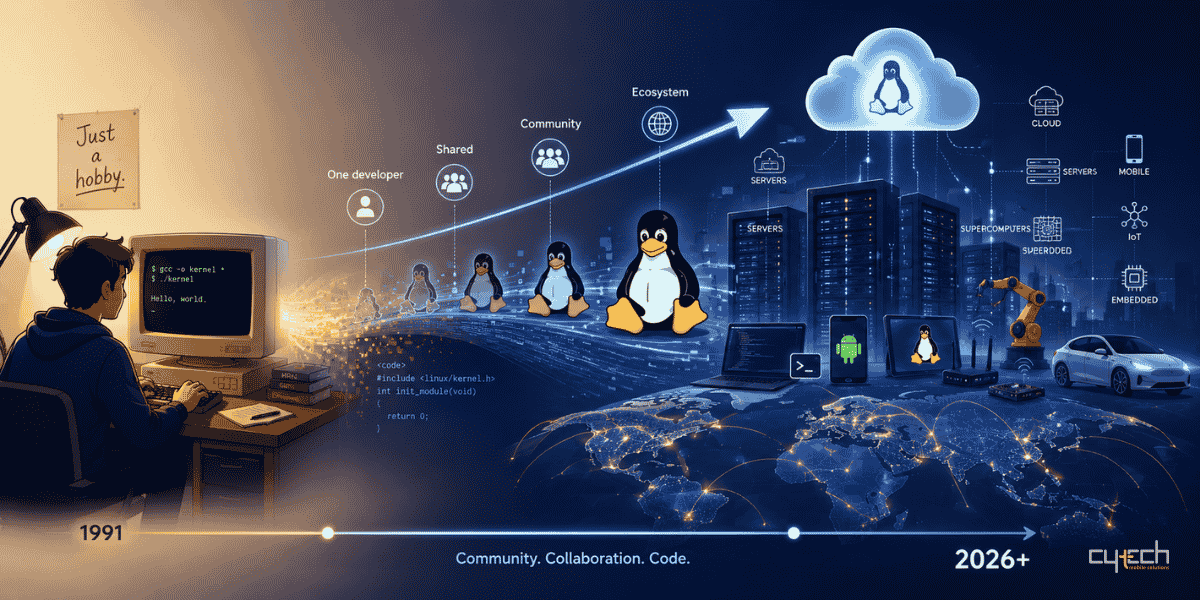
The transformation of Linux did not happen in one dramatic moment.
It happened gradually.
One bug was fixed. A new feature was added. Another developer joined. A company adopted it. A new use case appeared.
Thousands of small improvements accumulated over time.
Eventually, the hobby project became infrastructure used across the technology world.
That is perhaps the most useful part of the story for anyone building software today. We often want to know from the beginning exactly how large a project can become or what its final version will look like.
But software rarely develops that way.
Sometimes the first version simply teaches you what to build next. A user may discover a use case you never expected. A technical problem may force a better solution. A new technology may create an opportunity that did not exist before.
Building creates knowledge that planning alone cannot provide.
Thirty-Five Years Later
On August 25, 2026, thirty-five years will have passed since Linus Torvalds posted that first message.
Since then, technology has changed almost beyond recognition. The internet became part of everyday life, smartphones placed powerful computers in billions of pockets, cloud computing transformed software infrastructure and artificial intelligence is now changing how software itself is created.
Linux has remained part of that evolution because it continued to adapt.
Yet the beginning of the story remains surprisingly simple.
A young developer had an idea, started experimenting and decided to share what he had built.
He could not know exactly where it would lead.
And perhaps that is the real lesson.
Not every software project needs to begin with the ambition to change the world. Sometimes it is enough to solve one problem, keep improving the solution and remain open to what it might become.
Because sometimes a project described as “just a hobby” becomes something the world learns to depend on.