


Table of Contents
Despite the rise of messaging apps, SMS remains the backbone of critical digital communication. Businesses depend on it for authentication, notifications, and transactional messaging because it works everywhere — on every phone, every network, and every continent.
Yet the infrastructure behind SMS has not evolved at the same pace as the digital world.
At Cytech Mobile, we have spent more than two decades building telecom software and messaging platforms. During that time, we saw a recurring challenge across the industry: the messaging infrastructure that powers modern applications is often complex, fragmented, and locked behind proprietary systems.
This is exactly why Sendium, the open source messaging gateway, was created.
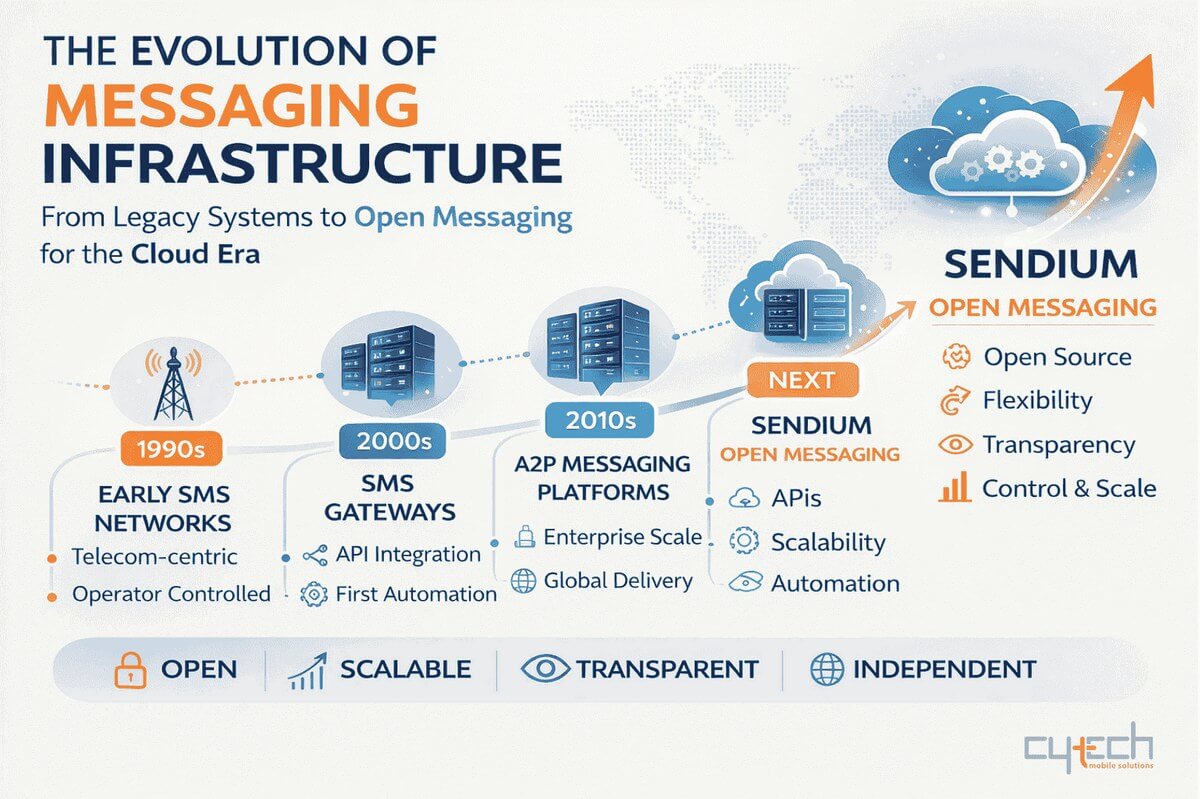
The Hidden Layer of Global Messaging
Most users never see the infrastructure that delivers the SMS messages they receive every day.
Behind every OTP code, transaction alert, or delivery notification lies a complex ecosystem of telecom infrastructure and software gateways.
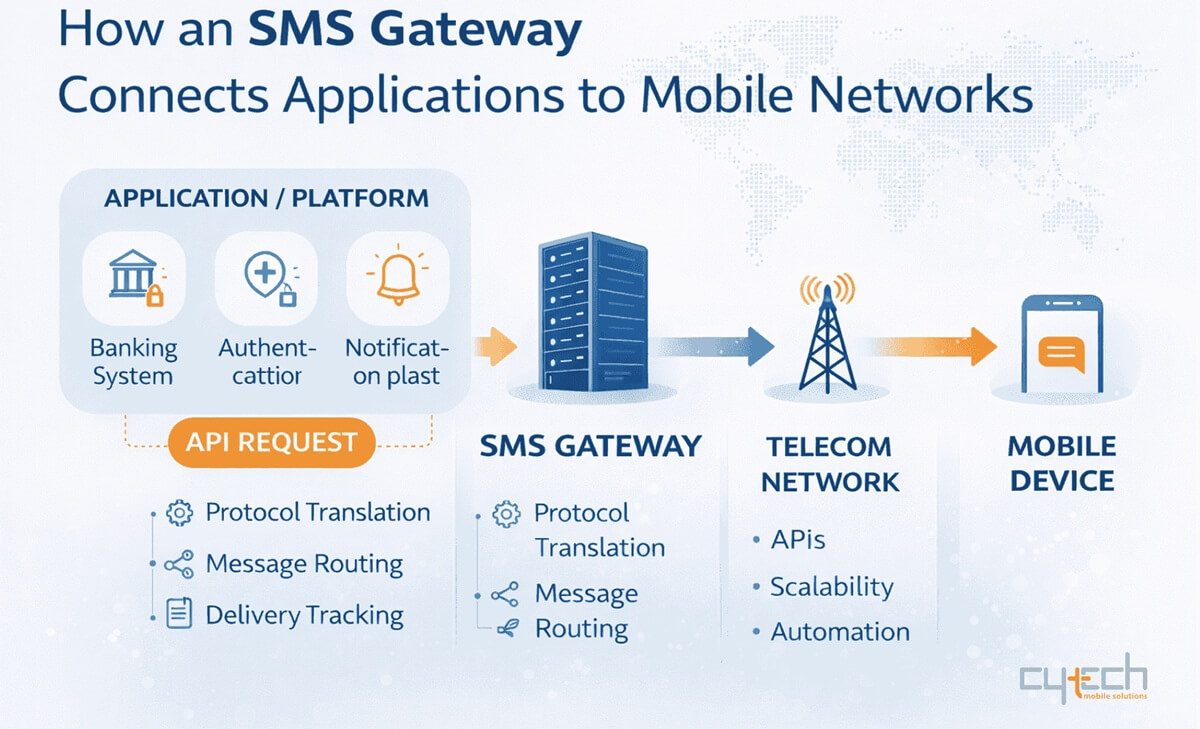
An SMS gateway acts as the bridge between software applications and mobile networks, allowing businesses to send and receive SMS messages through telecommunications infrastructure.
In practice, this means that:
- Applications connect to gateways via APIs
- Gateways translate requests into telecom protocols
- Mobile networks deliver messages to end devices
For modern businesses sending millions of messages, the gateway layer is critical.
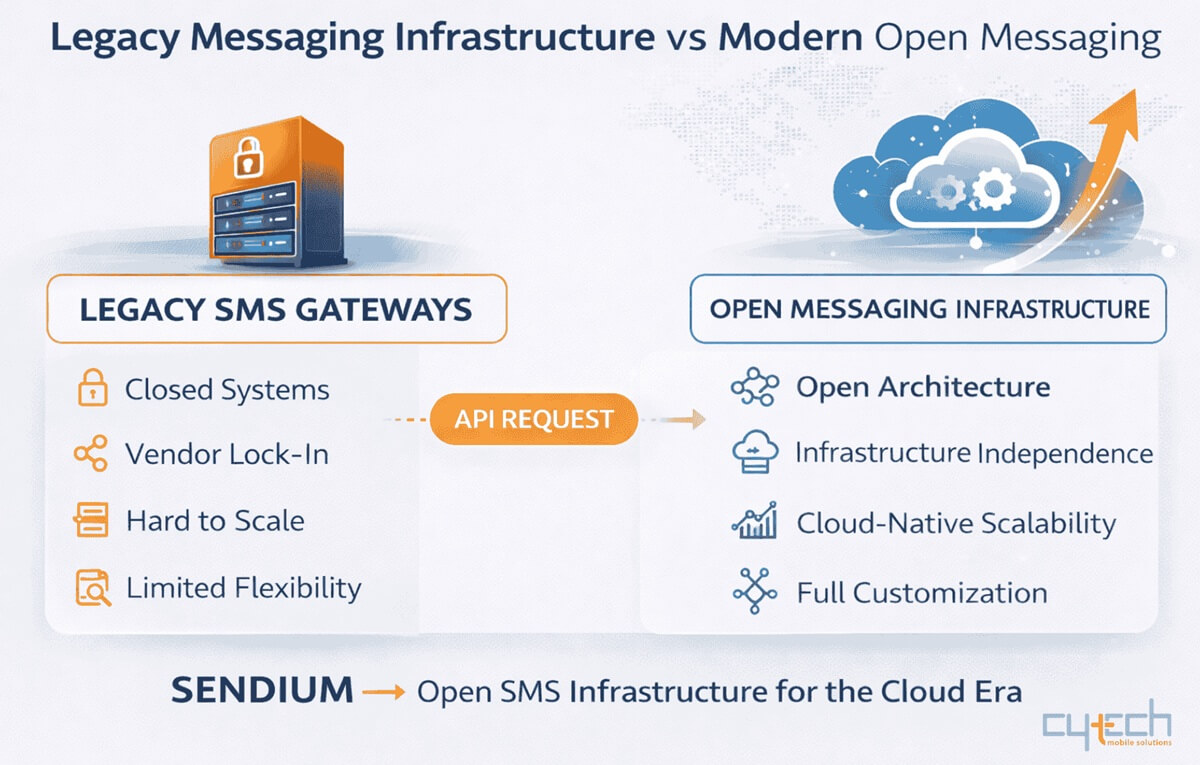
However, the traditional gateway landscape has several problems:
- Legacy infrastructure that is difficult to upgrade
- Closed systems with limited flexibility
- Expensive proprietary solutions
- Limited transparency in message routing and infrastructure management
As messaging traffic grows — particularly in A2P messaging, expected to reach trillions of messages annually — these limitations become increasingly visible. The industry needs a new approach.
The Shift Towards Open Messaging Infrastructure
Across the technology world, open ecosystems have repeatedly reshaped industries.
Linux transformed operating systems.
Kubernetes reshaped cloud infrastructure.
Open APIs redefined digital platforms.
Open-source messaging gateways have also existed for a few decades now, but many of them have not been upgraded and struggle to meet the requirements of cloud-native modern systems.
That gap is exactly where Sendium comes in.
Open-source messaging gateways offer several advantages for modern telecom environments:
| Advantage | Impact |
|---|---|
| Full transparency | Developers and operators can understand how messages are processed |
| Customization | Infrastructure can adapt to specific business needs |
| Independence | Companies avoid vendor lock-in |
| Innovation | Community contributions accelerate development |
Because the source code is accessible, organizations can modify and integrate SMS gateways into their own systems without licensing restrictions.
This flexibility makes open solutions particularly attractive for telecom operators, developers, and messaging platforms. Having available Sendium that is not only Open Source but also modern in architecture and features, brings new levels of freedom and flexibility to the telecoms enterprises.
Introducing Sendium: A New Generation SMS Gateway
Sendium is a modern open-source SMS gateway built for the cloud era.
Developed by the engineering team at Cytech Mobile, Sendium is designed to combine the flexibility of open-source infrastructure with the performance requirements of modern messaging platforms.
The vision behind Sendium is simple:
Give developers and telecom operators full control over their messaging infrastructure.
Instead of relying on opaque systems or expensive proprietary gateways, Sendium enables organizations to build, customize, and operate their own messaging environments.
The platform is designed to support modern messaging architectures through:
- cloud-native deployment models
- flexible API integrations
- scalable messaging infrastructure
- transparent routing and system visibility
In essence, Sendium aims to bring messaging infrastructure to the next level of open infrastructure philosophy that has already transformed cloud computing and software development.

Why Cytech Mobile Built Sendium
Cytech Mobile has been building telecom software since 2001, working closely with messaging providers, operators, and enterprises around the world.
Through years of experience in the A2P messaging ecosystem, we saw first-hand how difficult it can be to manage messaging infrastructure at scale.
Operators and messaging providers often face questions like:
- How can we control our infrastructure costs?
- How can we scale messaging platforms faster?
- How can we avoid vendor lock-in?
- How can we integrate messaging with modern cloud systems?
These challenges led us to develop Sendium.
Rather than creating yet another proprietary gateway, the goal was to build something fundamentally different:
A messaging platform that is open, transparent, and developer-friendly.
Built for the Next Era of Messaging
SMS may be over 30 years old, but it continues to power some of the most critical digital services in the world:
- Banks rely on SMS for security alerts.
- Platforms rely on SMS for authentication.
- Businesses rely on SMS for real-time communication.
As digital services expand globally, the demand for reliable messaging infrastructure will only continue to grow.
Sendium was designed to support that future.
By combining open architecture with modern development principles, it aims to help telecom operators, messaging platforms, and developers build messaging infrastructure that is more flexible, transparent, and scalable.
The Sendium Journey Is Just Beginning
Sendium is currently being developed by the Cytech Mobile engineering team and will soon become available to the wider developer and telecom community.
The goal is not simply to launch another gateway.
The goal is to contribute to a shift towards modern open messaging infrastructure.
If you want to learn more about the evolution and philosophy behind Sendium, you can explore the project here: https://sendium.org
Stay tuned — the next generation of messaging infrastructure is on its way.